Material
Not ordered, ordered and received are three different states. Ordered does not mean the job can be released.
Not orderedOrderedReceived
Production management for job shops
From backlog to shipped. One operational view. Schedule, job cards, drawings, material status, QC, operation timers and shipping on one shared board. Planners see what is coming. Operators see what to run next.
Runs on a computer in your shop.
Your drawings and job records stay on your storage.
What FabTandem is
Your ERP manages transactions. FabTandem manages execution. It works alongside your ERP, reads its report exports and does not try to replace it. Every screen is built around one question: what is stopping this job from shipping?
30seconds
Built inside a working fabrication shop, by people who stand at the laser at 6 a.m. asking why a job has not moved.
01 The board
Every work center gets a lane. Every job is a card with its drawing, quantities, due date and material status, so the whole shop works from the same picture.
Select a card to see its print. Job 26-1201 was split: 24 panels ship today on traveler 26-1201-A while 16 finish on the laser.
02 Prints
The drawing travels with the job. Operators see the part number, revision, material and routing on the card and the print, so the revision on the floor matches the revision on the order.
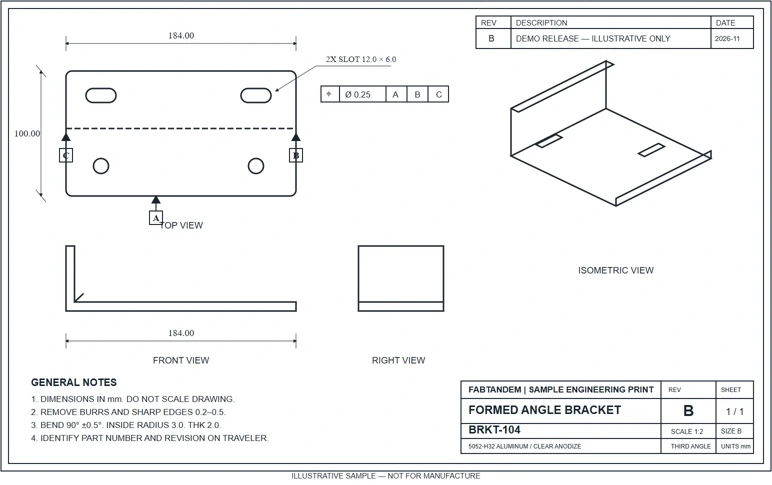
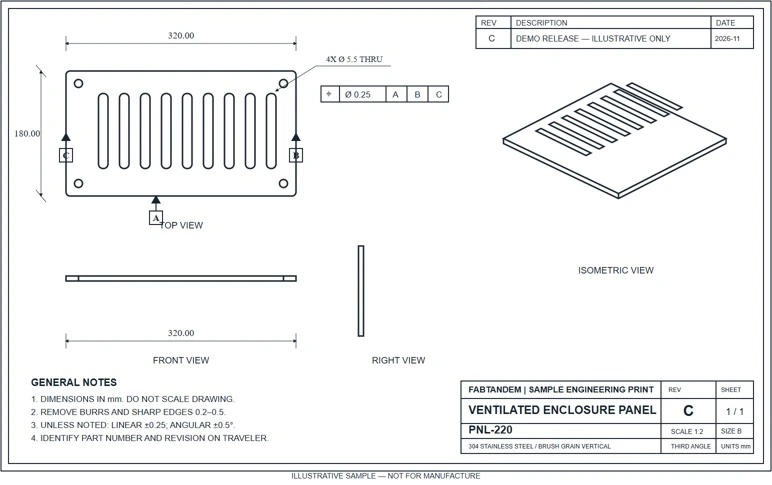
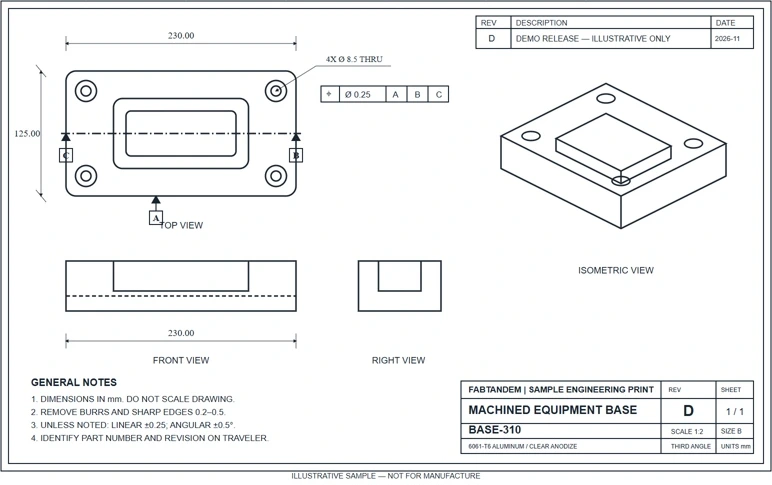
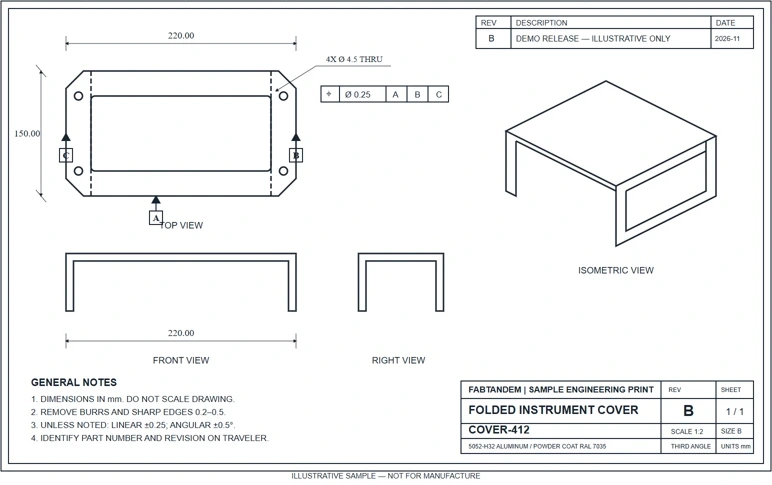
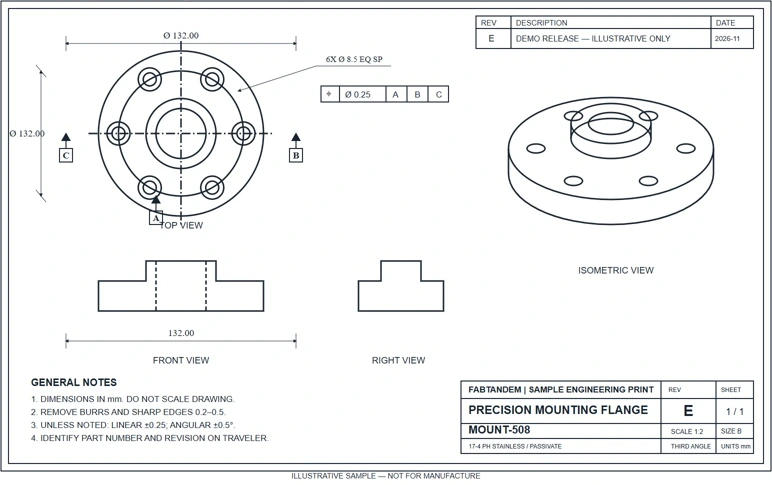
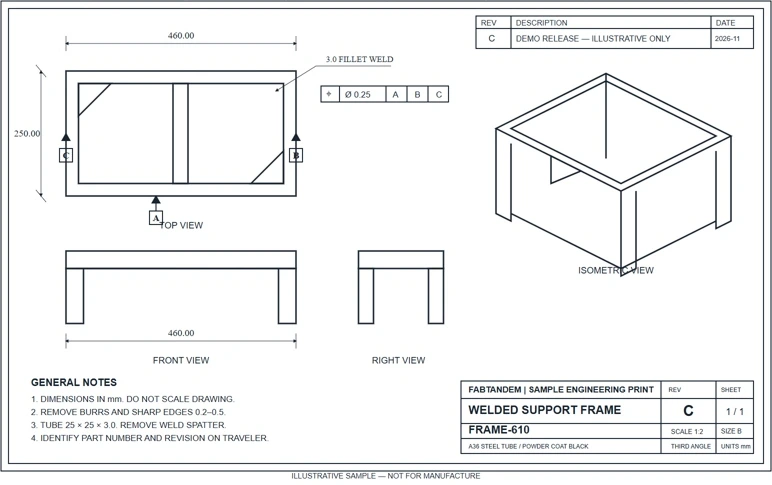
Illustrative sample prints. Not for manufacture.
03 Blockers
Most software tells you a job is open, in process or complete. A fabricator needs to know why it is not moving. FabTandem puts the real reason on the card.
Most software says
FabTandem says
Not ordered, ordered and received are three different states. Ordered does not mean the job can be released.
Not orderedOrderedReceived
PEMs, fasteners, hinges and bought items from the BOM. A two-dollar part should not hold a ten-thousand-dollar shipment.
Coating demand is tied to the jobs that need it, so finishing and purchasing see it before parts arrive at paint.
Plating, anodize, heat treat and other outside steps stay visible before they turn into a surprise delay.
Material, hardware, chem film and powder coat certs, plus inspection reports. A job can be finished and still not ship.
04 How it works
Not create job, assign task, close job. The questions a shop actually asks, in the order it asks them.
PO received.
Can we build it?
Material ordered?
Material received?
Can we release it to the floor?
First article approved?
Hardware here?
Can it go to paint?
Are certs complete?
Can shipping actually ship it?
Import your backlog from your ERP export, schedule jobs by work center and day, and check material status before work reaches the floor. Bills of materials, drawings and job packets attach to the card.
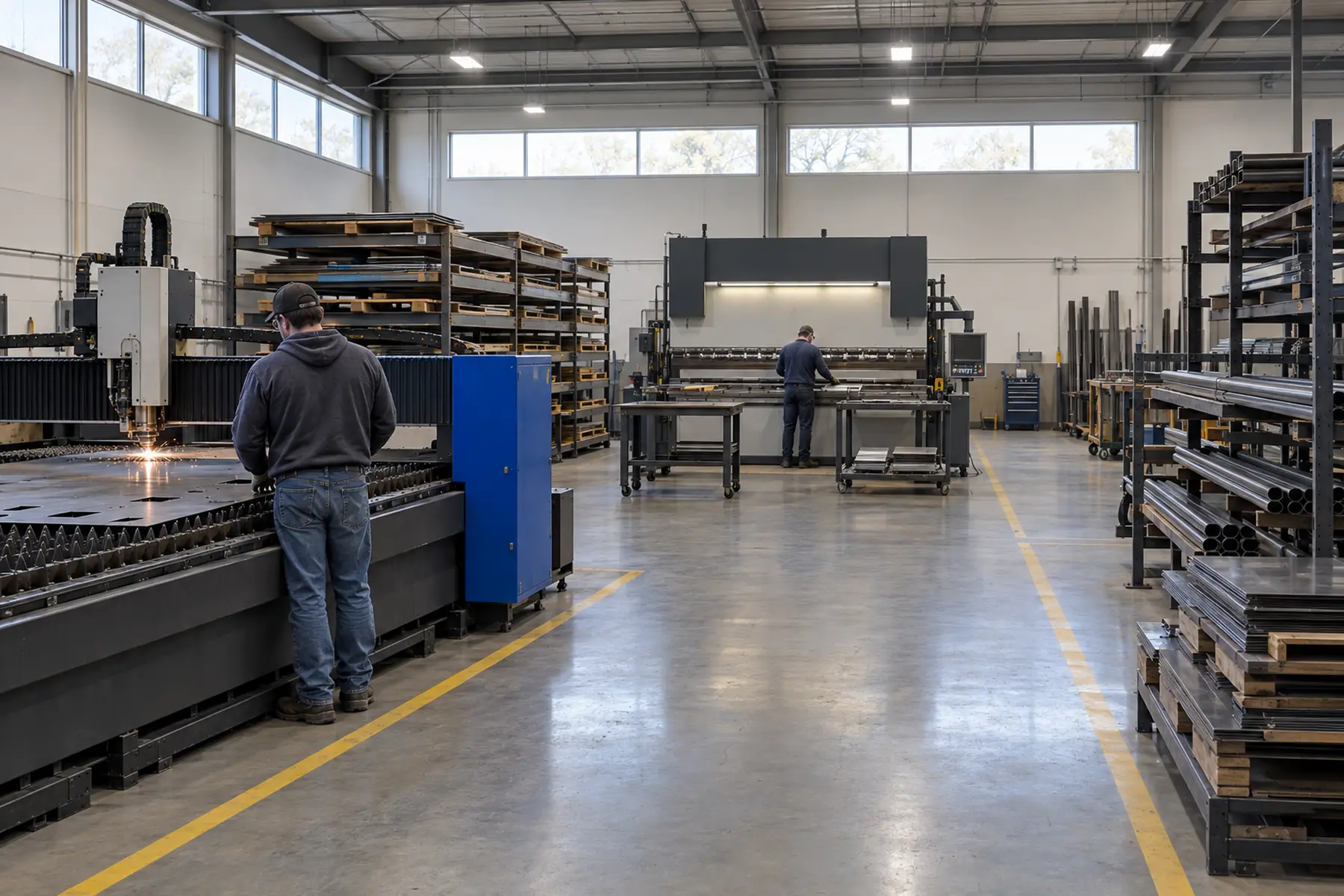
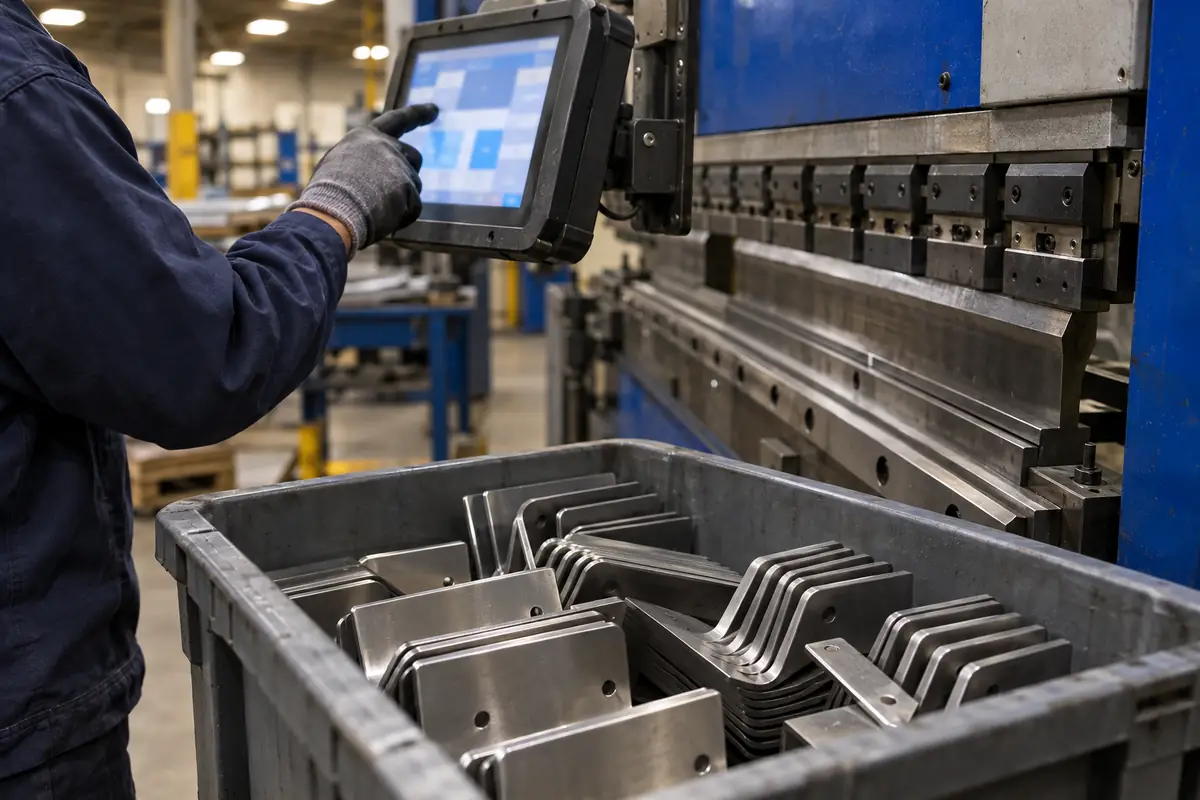
Approved work moves from the planning board into production, so the floor gets a controlled handoff instead of verbal priorities. Operators open job cards at shop kiosks, view PDF drawings and 3D STEP models, start and stop operation timers, record QC and enter completed quantities. Partial completions print a split traveler that moves with the parts.
Kiosks that keep up with the floor. Several operators can finish work on the same job at the same time. FabTandem merges their updates instead of letting the last person to tap Save overwrite everyone else.
Finished work flows to shipping with packing lists and shipping documents that carry your company's identity. Nothing ships with the FabTandem name on it.
Shipping that closes the loop. Shipping sees exactly what is complete and what is still on the floor. Packing lists come from the job, not from someone retyping it, and every shop keeps its own sender details.
05 Shipping
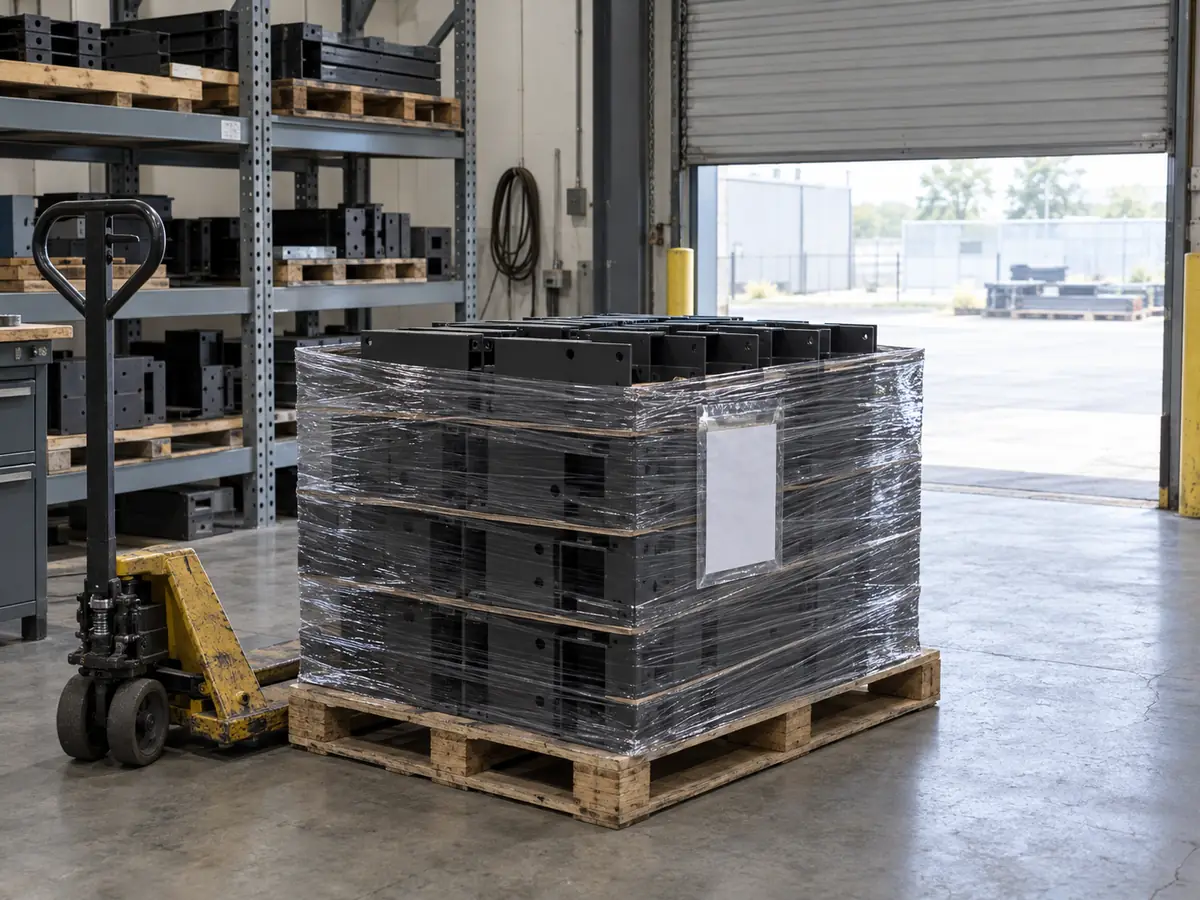
Everything in the shop leads to one outcome: does the customer get their parts on time? FabTandem keeps production tied to what was promised and measures output in shipments and dollars, not in how busy the floor looks.
06 Capabilities
The shop no longer has to turn a job number into a print, a route, a priority, a due date and a verbal instruction before work can start. It is all on the job.
Feature availability depends on configuration, data quality, integrations and the operating rules each shop sets up. Capacity results depend on the hours, rates, calendars and routings you supply.
07 Security and controlled data
The Controlled and Defense editions run on hardware you own, inside your network. They are designed to work without any outside connection, so drawings and job packets never leave your environment.
Software alone does not make a shop compliant. Your CUI, ITAR and CMMC status depends on your environment, procedures and assessment. FabTandem is built to support those programs, not to replace them.
08 Pricing
One price per shop installation. Pay monthly, or yearly and save 20 percent.
For job shops running ordinary commercial work.
$549 / month
or $5,270.40 billed yearly
CUI and ITAR
For shops that handle CUI or ITAR technical data.
$849 / month
or $8,150.40 billed yearly
CMMC
For defense suppliers preparing for a CMMC Level 2 assessment.
$1,449 / month
or $13,910.40 billed yearly
Prices in US dollars, per shop installation. Taxes may apply. Founding-shop pilots are available. Ask us.
09 FAQ
No. Your ERP keeps handling quoting, purchasing, accounting and invoicing. FabTandem imports your ERP's report exports and turns them into a board the shop can run from, so nobody retypes jobs.
Build-to-print job shops and fabricators. The people it is built for are the planner, supervisor, operator and production manager moving work through the shop, plus the owner who needs to see what is late, blocked and shipping. The shop floor comes first.
No software can do that on its own. Compliance depends on your whole environment, your procedures and, for CMMC, your assessment. The Controlled and Defense editions give you a production system designed for that environment, plus the documentation you need to show how it fits.
On a computer in your shop. Drawings, job packets, routings and production notes stay on your storage. The billing system only knows your account and subscription.
A Windows computer to host the board, a web browser on office computers, and touchscreens or tablets for shop kiosks. We help you set it up.
The board keeps working while payment is retried. If a subscription ends, the board becomes read-only so you can still see and download everything. Your data is never deleted.
Yes. Yearly plans save 20 percent. You can change plans, update cards and download invoices yourself from the billing portal.